


Styles and directions in Pole Dance
Pole Dance still causes mixed feelings for many people – some approach it with caution, some with disapproval, others with admiration. It is often associated only with something provocative or inappropriate. But those who have tried it at least once know: it is about something completely different. Pole Dance is not just a dance by the pole – it is about strength, grace, courage, and freedom. It is a full-fledged sport where the whole body works. Not everyone likes running or gym workouts, but here – your muscles are toned, and you get pleasure from the process. PoleDance is divided into different styles: from dance to tricks and acrobatics. And that’s the beauty of it – everyone can choose what suits them best. Next, we’ll tell you about the main styles and their differences.
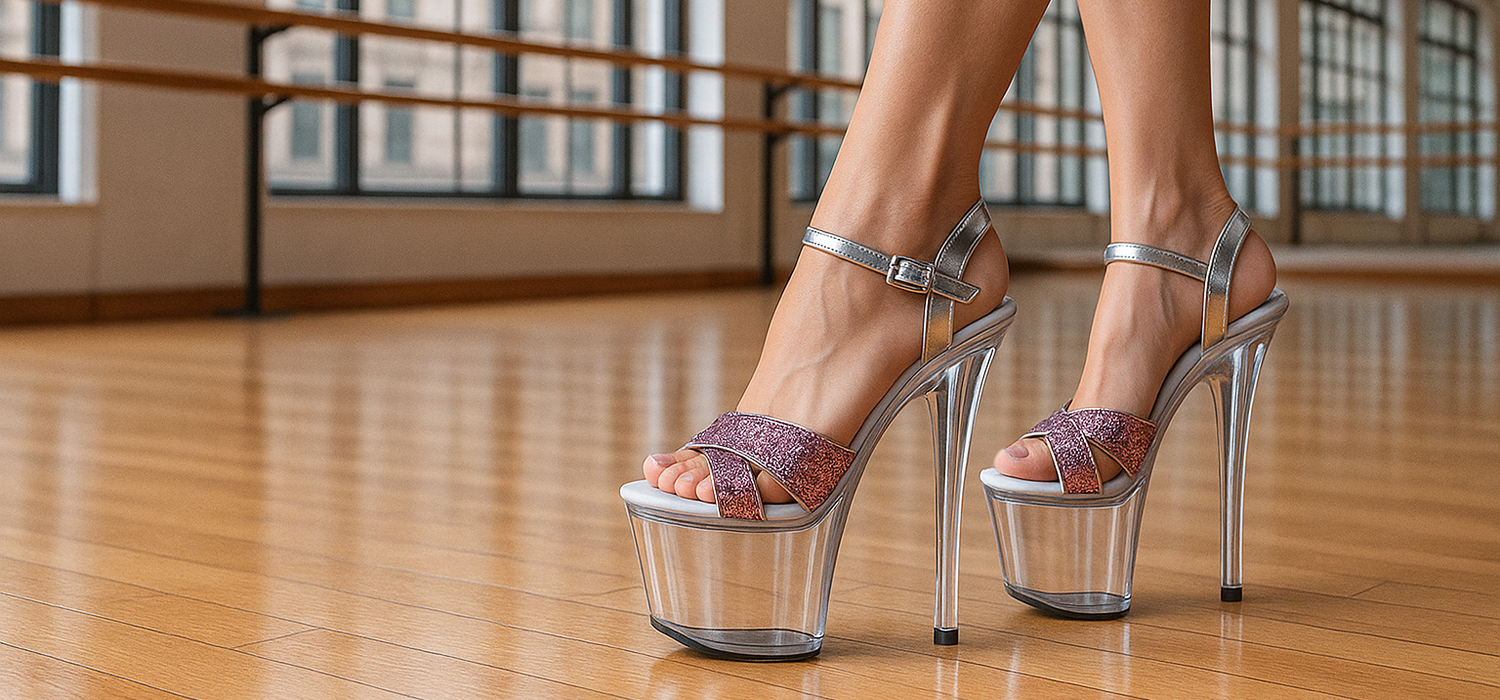
Pole Sport – maximum strength and no stereotypes
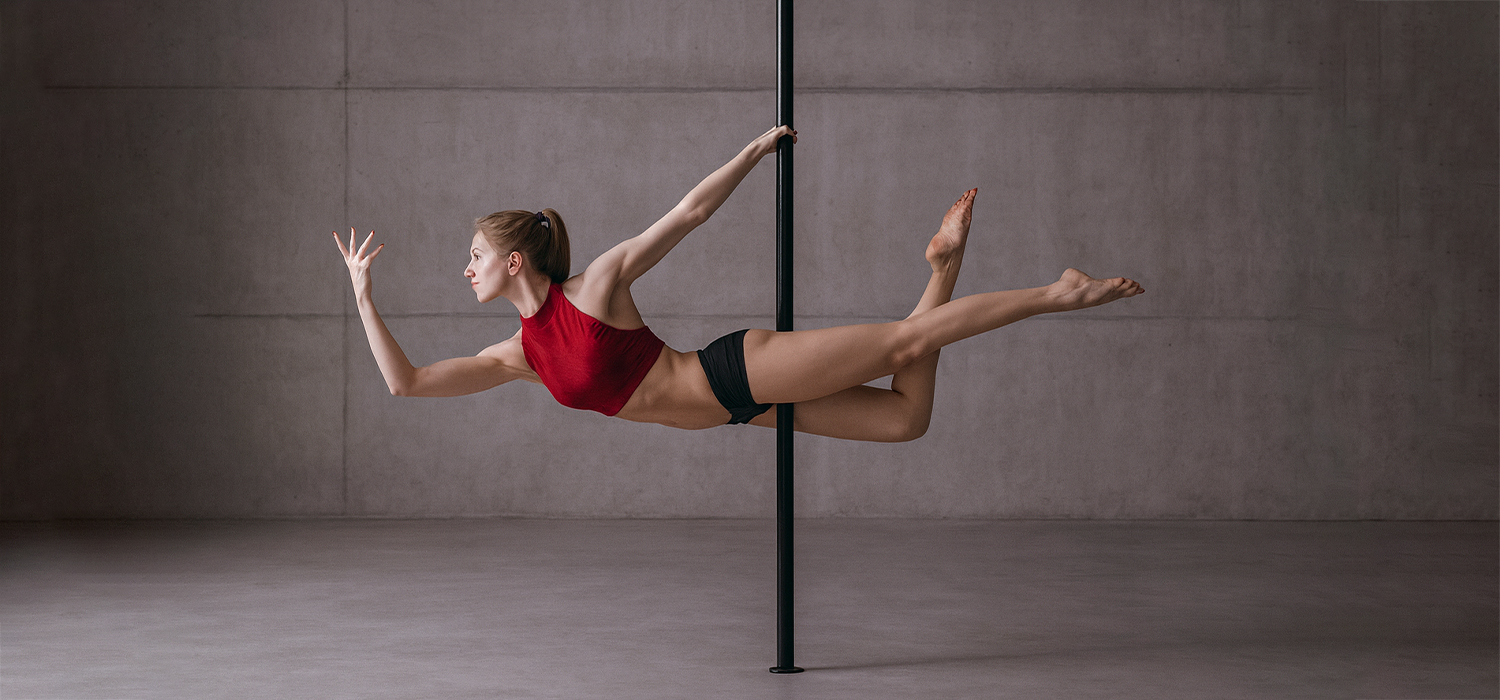
If you thought Pole Dance was only about dancing, Pole Sport will break this myth from the very first class. This is the athletic side of pole, where technique, strength, and body control come first. It is a recognized discipline that is even applying to be included in the Summer Olympic Games. There is almost no typical “dance” aspect here – instead, there are demanding tricks, endurance, acrobatics, and a strong focus on progress.
Pole Sport is not about the show, but about real work on yourself. The focus is not on appearance or stage presence, but on physical training, technique, and clean execution of tricks. Competitors perform barefoot or in special sports shoes, without heels. The music is purely instrumental, without lyrics. The main goal is not to distract, but to demonstrate what the body is capable of.
Performances in this style are strictly regulated:
- clear rules
- mandatory elements
- scoring system similar to gymnastics
Even the number of floor touches is limited, and acrobatics must take up at least 70% of the routine. Dance is allowed, but it plays a secondary role.
Pole Sport is perfect for those who love physical challenges, want to push their limits, and see real results. Here you are not just “moving beautifully” but truly training your body – every muscle, every effort. In Pole Sport, age or “perfect body shape” doesn’t matter – what matters is motivation, consistency, and goals. With every training session, you not only strengthen your body but also build strength, confidence, and character.
Pole Art – about feelings, aesthetics, and self-expression
If Pole Sport is pure sport, then Pole Art is about stage, emotions, and storytelling through the body. This style combines the power and technique of pole with theatricality, fluidity, and meaning. Here, it’s not only about the tricks but also about how you present them. Like in contemporary dance: the body speaks, moves, and feels.
In Pole Art, you don’t just perform elements – you live through the performance. Often these shows look like mini-theatrical plays with a plot, character, and idea. Facial expressions, musicality, and overall artistry are essential. And of course, the visual image matters – costume, makeup, everything must work together to support the concept of the routine.
The value of Pole Art lies in harmony: technique + emotions + aesthetics. You can use songs with lyrics, costumes can be bright and memorable. There’s dance, there’s acrobatics, but no strict rules like in sports – more freedom and creativity.
Pole Art is perfect if you want to express yourself, tell your story, and move beautifully and artistically. It’s a great direction for those who love dance but also want meaning and emotion – not just “show a trick” but create a performance that will be remembered.
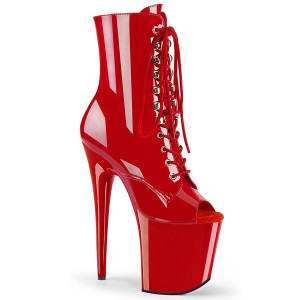
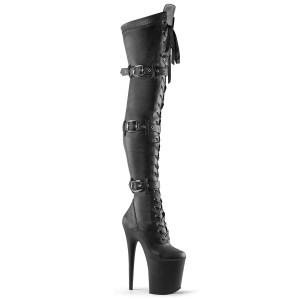
Exotic Pole – femininity, freedom, and drama
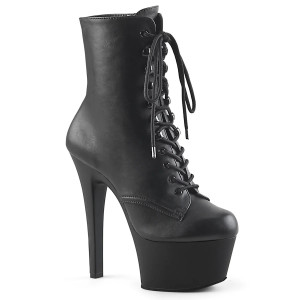
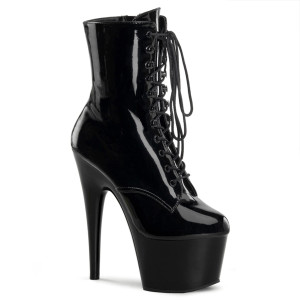
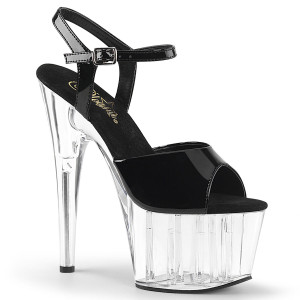
Exotic is perhaps the most recognizable and discussed style in Pole Dance. For some, it inspires admiration; for others, it raises questions. But once you remove the stereotypes, it becomes clear: Exotic is about grace, plasticity, artistry, and bold self-expression. Here, the dance itself is the star. Image, heels, presentation, atmosphere – everything is important. And at the same time, just like in other styles, the body works at full capacity: Exotic is not “just beautiful,” it’s powerful physical work plus emotions.
But Exotic is not one single style – it has subcategories. And that makes sense: each has its own technique, load, and character. One is about smoothness, another about explosiveness. One requires more flexibility, another – more control and strength. Thanks to this, everyone can find their own pace, level, and mood.
Exotic Flow – soft, fluid, sensual
This style is about plasticity, flowing movements, and smooth transitions. There are no sharp accents, pomp, or dramatics – everything is smooth and graceful, like the dance is flowing. Music is usually deep and emotional, with a lot of floorwork, and the imagery is light, feminine, almost airy.
The ratio of tricks to choreography here is about 20% to 80%. The focus is not on the difficulty of the elements but on how they connect. The key is to extend movement, breathe with the music, and convey emotion through every detail – from foot positioning to gaze.
It’s perfect for those who want to explore their softness, learn to move gracefully, and enjoy every gesture.
Exotic Hard – powerful, sharp, impressive
This style is about strength, charisma, and impact. Hard has less “softness” and more drive. The music is usually hip-hop, electronic, or tracks with a strong beat. Its main features are:
- accented movements
- clear, sharp accents
- powerful delivery
- an aggressive (in a good way) style
This is the most trick-focused Exotic category: the ratio of tricks to choreography is about 70% to 30%. The emphasis is on executing complex pole elements in heels. But it’s not just a set of tricks – every move must be danceable, part of the composition, with rhythm and logic. The overall image, concept, and delivery are equally important.
This style is perfect if you want to release tension, break free, pour yourself into dance – and do it powerfully.
Exotic Old School – vibe, charisma, and sensuality
This is probably the most expressive and feminine category of Exotic. Here, the focus is not on tricks or technique but on charisma, delivery, and that “sensual vibe” that makes it impossible to look away. Old School is when dance becomes a body language: every wave, accent, and look builds atmosphere and presence.
Tricks here make up less – about 40%, with 60% choreography. Movements are chosen to be as fluid as possible: soft, smooth transitions, no sharp edges. The key is musicality – making the dance follow every beat, stretching with the sound, speaking to the audience without words.
This style includes lots of floorwork, catbacks, body rolls, signature slides, and classic exotic moves. Always performed in platform heels, with a striking image and confidence in every move. It’s perfect if you want to explore your sensuality, boost your confidence, and learn to hold the audience’s attention effortlessly.
That’s how versatile Exotic is. Each substyle has its own character, emotions, technique, and energy. It’s not about formality, but about letting every dancer find their own: tempo, style, and way of expression.
Pole Dance is not just one style but a whole palette of directions. Each has its own rhythm and character. The main thing is not to be afraid to try. Start with the basics, feel your body, music, and mood. If you enjoy it – you’ll stay. If you crave something different – it’s easy to switch. The key is to let go of stereotypes and give yourself a chance. After that, your body, music, and emotions will decide everything.
And if you’re wondering which heels are best for training – we’ve prepared a helpful guide for you: How to choose pole dance shoes: tips for beginners.
 Previous
.png) World
World
 United Kingdom
 Poland
 Ukraine
 Czech
Czech
 France
 Deutschland
